Describe the fault
Share the postcode, symptom, isolation status and safe photos.
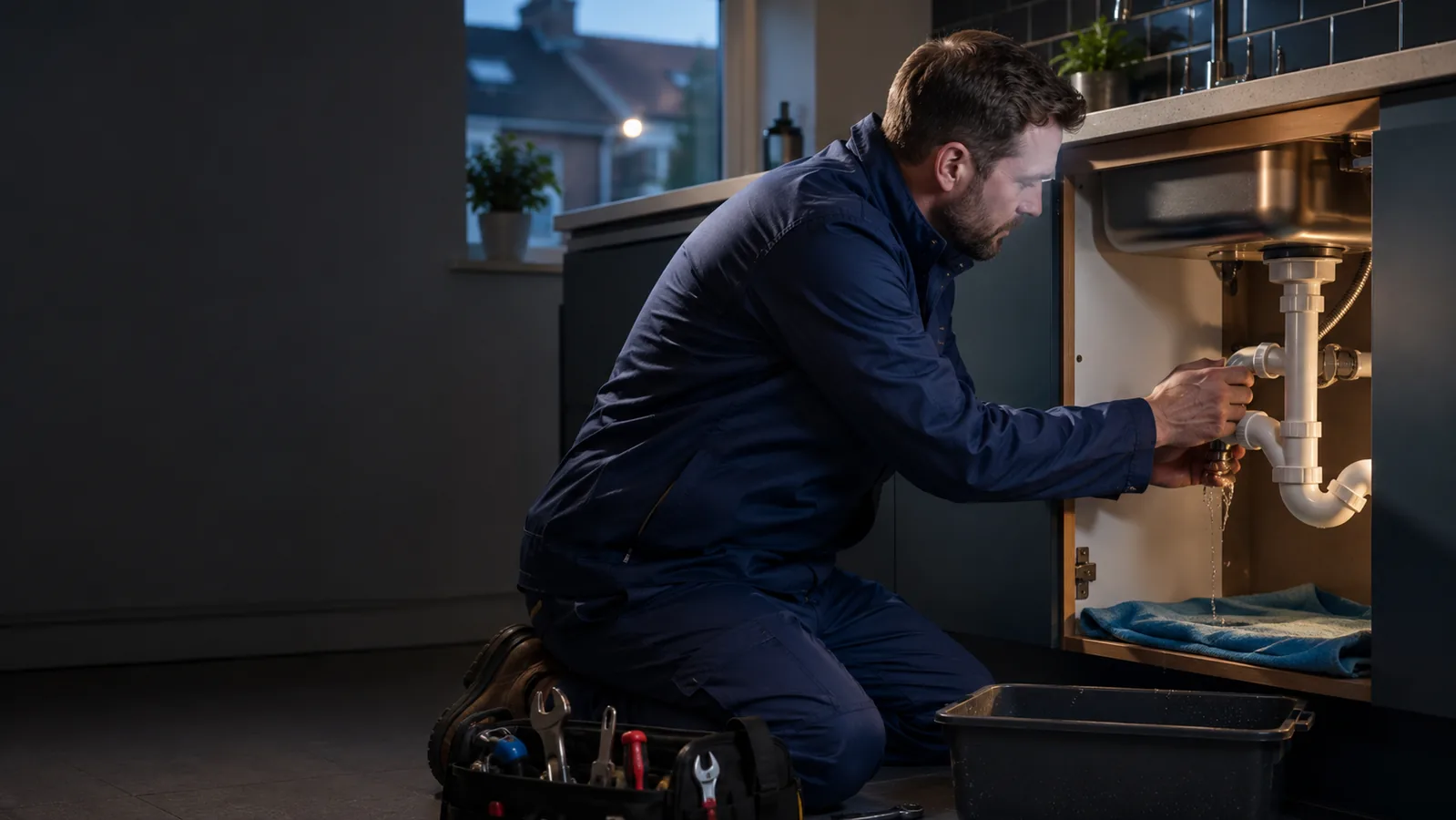
Urgent leaks, blocked fixtures and planned plumbing for homes, landlords and local businesses across Nottingham and surrounding areas.
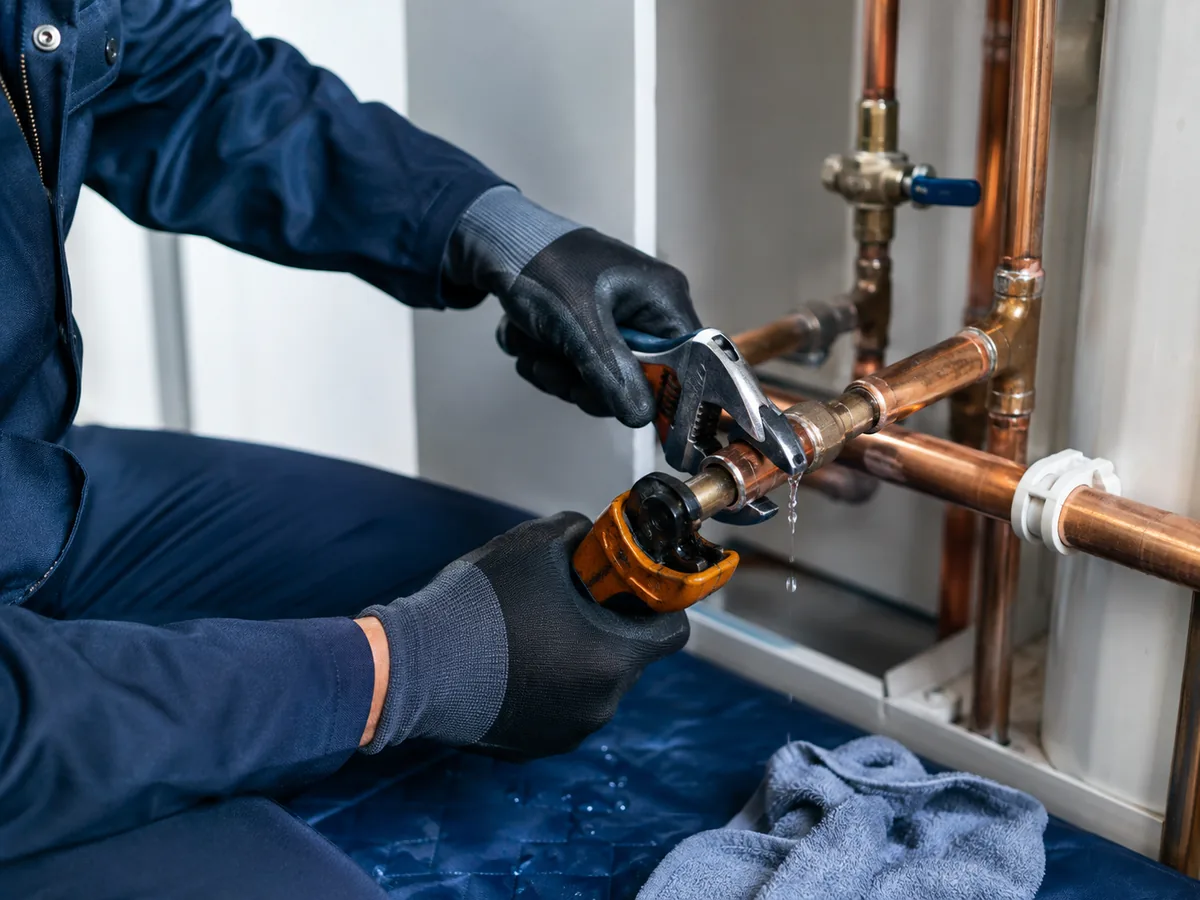
A leak under a sink, a cistern that will not stop running and a failed mains pipe are different jobs. The first conversation should make that distinction clear.
Plumbing247 covers urgent and planned plumbing from a published West Bridgford address. We ask what is leaking, what has been isolated, how the pipework can be reached and what outcome you need.
Choose the closest match. Each category opens into specific repairs and installations.
Urgent help for uncontrolled leaks, overflowing fixtures and water problems that cannot safely wait.
15 services 02Targeted checks for visible drips, hidden moisture, unexplained meter movement and recurring damp patches.
15 services 03Isolation, thaw planning and repair for split, frozen or suddenly failed water pipework.
16 services 04Repairs to copper, plastic and mixed domestic water pipework where joints, valves or sections have failed.
14 services 05Planned replacement of ageing, undersized or repeatedly failing water distribution pipework.
14 services 06Repair and replacement of dripping, stiff, noisy or poorly performing taps and mixer valves.
13 services 07Repairs for toilets that leak, run continuously, flush weakly, fill slowly or will not clear correctly.
15 services 08Installation and repair for kitchen sinks, utility sinks, bathroom basins, wastes and overflows.
16 servicesShare the postcode, symptom, isolation status and safe photos.
We confirm availability and the likely attendance scope from the details provided.
The accessible pipework or fixture is checked before repair options are agreed.
The work area is checked and any follow-on recommendation is explained.
Our intended coverage is approximately 25 miles around Nottingham. Choose your area for local services and contact details.
Good preparation protects the property and helps the plumber arrive with a clearer picture.
Call or send photos without completing a long quote form.
22 Franklin Drive, West Bridgford, Nottingham, NG12 4ER.
Availability, scope and timing are confirmed from the actual job details.
Water, waste, fixtures and pipework—not gas, electrical or vehicle services.
Clear guides for limiting damage and describing the fault accurately.
A calm, room-by-room way to locate the main internal stop tap, check that it moves and limit damage while you call a plumber.
Read guide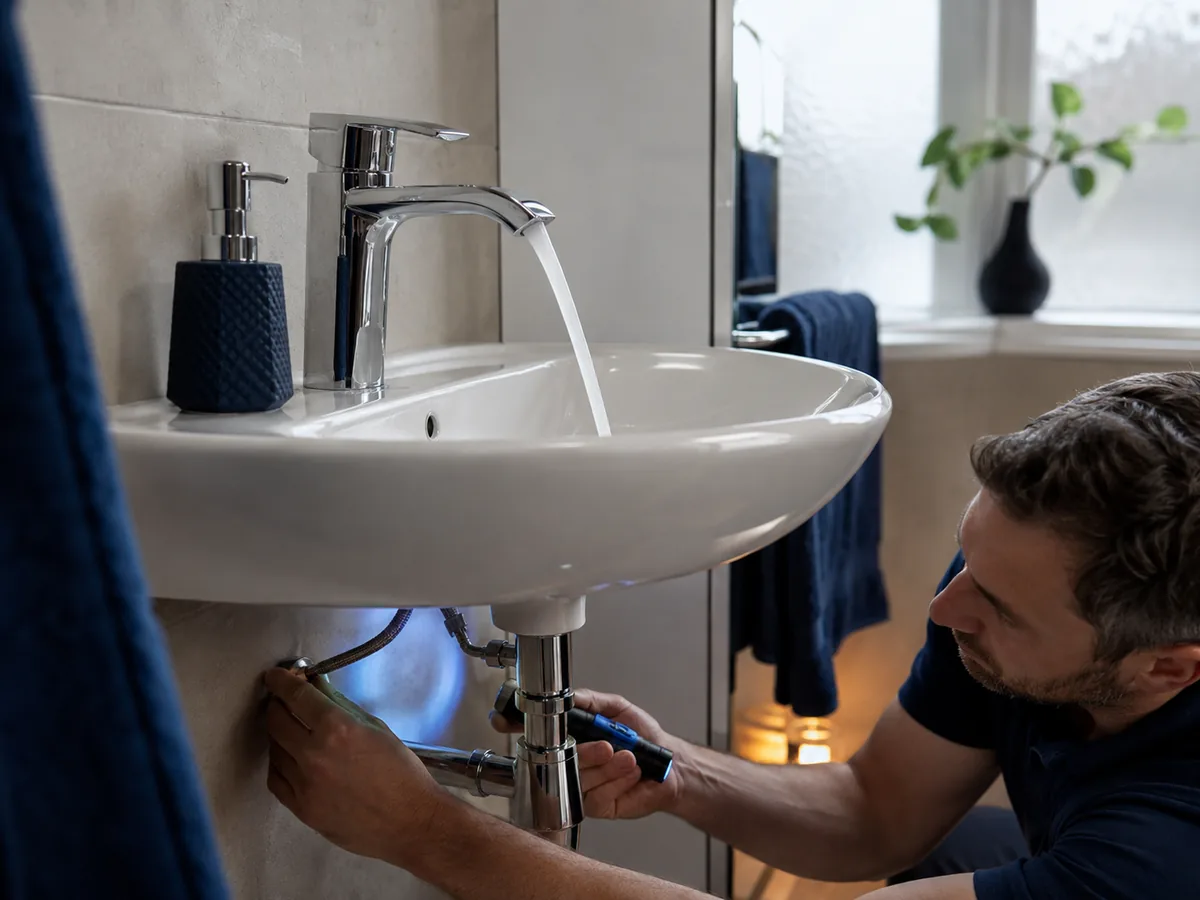
Cartridge, washer, seat and pressure faults can feel identical at the handle. Here is what a plumber checks before replacing parts.
Read guideMeter movement, staining, musty smells and pressure changes can point to a leak before water becomes visible.
Read guideFind useful advice about leaks, fixtures, access, responsibilities and planned plumbing work.
Plumbing247 handles enquiries about water leaks, fixtures, waste pipes and planned plumbing from its base at 22 Franklin Drive, West Bridgford, Nottingham, NG12 4ER. Call +44 7888 885791 or send a WhatsApp message with the postcode and the problem. The established coverage is approximately 25 miles around Nottingham, with the particular address, work and appointment confirmed when you make contact.
Start with what you can see: water beneath a sink, a toilet that keeps filling, a shower that drains slowly or a tap that has become difficult to use. You do not have to identify a failed washer, valve or pipe before calling. A clear account of the symptom helps distinguish an urgent water problem from a repair that can be planned around access, replacement parts or other building work.
The service directory is organised into 27 main categories. Each category leads to the relevant detailed tasks. This guide explains how those routes fit together, what information changes the scope and how to prepare for a visit. It covers plumbing enquiries; gas-appliance work and electrical work need their own appropriately qualified arrangements and should not be assumed to be included in a general plumbing booking.
For emergency plumbing, describe whether water is actively flowing, dripping, overflowing or appearing through a ceiling. Give the room and the nearest affected fitting if you know it. Mention whether the problem is spreading and whether other people or properties are affected. Do not touch wet electrical equipment or enter a hazardous area to obtain photographs for the booking.
If you already know a safely accessible isolation point and have been able to stop the water, tell the plumber what you isolated and what changed. Do not force an unfamiliar or seized valve. If the water cannot be isolated, say so immediately. The appointment discussion should reflect the current condition rather than an assumption that a leak has stopped because the surface has been dried.
A first visit may involve identifying the source, controlling the escape and assessing a repair. The permanent solution can depend on access, the condition of surrounding pipework and the availability of suitable fittings. Ask what the urgent appointment includes and what might require a later decision. Stopping visible water is not automatically the same as completing every repair or restoring damaged finishes.
If there is an insurance or property-management process, notify the appropriate contact and retain the relevant information. Plumbing247 cannot determine an insurer's cover from the symptom alone. Keep records of the agreed work and the findings supplied. The plumbing task, drying work, decorating and replacement of damaged possessions may be separate arrangements with different responsible parties.
Water beneath a fitting does not always originate where it lands. Describe the highest point where you can see moisture without dismantling anything. State whether it appears while a tap runs, after a toilet flushes, during an appliance cycle or even when the room is unused. That timing helps the plumber understand which parts of the installation may need assessment.
The leak detection and repair service is the route for an uncertain source, recurring moisture or a problem hidden by finishes. Tell the booking contact what is accessible and what is covered by tiles, flooring, cabinetry or a ceiling. A photograph of the wider setting can be useful alongside a close view of the wet area. Do not open a wall or lift a floor solely to improve an enquiry photograph.
Ask whether the proposed visit is to investigate, repair a known accessible fault or both. If access through finishes may be required, clarify who can approve that work and who will make good afterwards. A leak investigation should not be described as a fixed replacement task before the source is established. The scope needs room for findings while keeping additional work subject to approval.
Keep a simple timeline of the symptom if the leak is intermittent. Note which fixture or appliance was in use and whether neighbouring rooms were affected. Avoid repeatedly running a leaking fitting to demonstrate it. A factual description and existing photographs may be enough to plan the visit without causing more water to escape.
A toilet that keeps filling is different from one that overflows when flushed. Explain whether water runs continuously into the bowl, appears outside the cistern, escapes at floor level or backs up during flushing. The toilets and cisterns category covers fixture enquiries, while a drainage problem may need the drain-unblocking route. You can describe the symptom without choosing an internal part name.
Tell us whether the cistern is exposed or concealed behind furniture or a wall. If there is an existing access panel, mention it. Do not remove fitted furniture or tiles just to locate a mechanism. A concealed installation can need different preparation and parts from a conventional close-coupled toilet. The model or a previous installation document may help identify suitable replacement components.
If it is the property's only toilet, say so. If other facilities are available, explain that too. The practical effect of the fault helps frame the appointment discussion, but an advertised service category does not itself guarantee a particular arrival time. Keep the access person reachable and report any change in the symptom before the visit.
Where you are considering a complete replacement, ask about the existing soil connection, footprint, access and any making good. A new toilet selected for appearance may not match the old installation without additional work. Confirm product suitability before purchase, particularly for concealed frames, unusual outlet positions or furniture designed around specific dimensions.
For tap and mixer repairs, describe whether the concern is a drip from the outlet, water around the base, a stiff handle or an inconsistent flow. Mention whether hot, cold or both supplies are affected. If the fitting has a visible brand or model, provide it. You do not need to dismantle the tap to identify a cartridge before booking.
Replacement parts can depend on the particular fitting. Ask whether an initial inspection is needed before a part is ordered. If you already have a replacement tap, say so and provide its product information. Discuss whether customer-supplied products are accepted and who confirms compatibility. A sealed box marked “mixer tap” does not describe every connection or installation requirement.
Describe whether the tap is on a sink, basin, bath or wall-mounted arrangement. Tell the plumber about fitted cupboards, drawers or restricted access underneath. Ordinary contents can be cleared safely before the appointment, but do not move pipework or remove structural fittings. A photograph of the accessible underside may help show the setting without determining the repair itself.
If an isolation valve is leaking or will not operate, identify its location and the effect on the available water supply. Do not keep forcing it. Ask whether the repair will interrupt water to one fixture or a wider part of the property. This is particularly relevant for shared premises or a business that needs to arrange an interruption around customers or staff.
The drain-unblocking category starts with the drainage pattern. One slow basin, several fixtures backing up and water returning into a different outlet are different observations. State what is affected and when it occurs. Tell the plumber about any product or equipment already used so the visit can be planned with accurate information.
Do not keep adding water to a fixture that is overflowing or repeatedly use chemical products to chase a persistent blockage. Explain the previous attempts rather than repeating them for a demonstration. If the issue has returned after earlier work, retain that visit reference and any findings. The current enquiry may need an investigation of the waste route rather than another assumption about a simple local obstruction.
Ask whether the proposed task concerns an internal trap, an internal waste run or another drainage component. If a shared drain or sewer may be involved, responsibility needs to be established. The person who controls an individual kitchen may not control every part of the connected system. Give the property type and any known shared arrangement so the scope is not based on the wrong boundary.
For waste pipes and traps, describe leaks, loose connections, recurring odours or poor drainage separately. A trap replacement may not resolve a problem elsewhere in the system. Ask what has been observed and which part of the proposed repair addresses it. Keep access and making-good arrangements clear where pipes are hidden behind finished surfaces.
If flow has changed, explain whether every cold outlet is affected or only one fitting. State whether the change was sudden, whether hot water is also affected and whether you know of nearby supply work. Do not assume that fitting a pump is the answer. The water pressure and pumps service should begin with an assessment of the actual supply and installation.
Give the plumber any existing information about the incoming supply, storage or treatment equipment. In a shared property, note whether neighbours or other units report the same symptom. Those observations help distinguish a fixture-level concern from something involving a larger part of the water system. They are useful booking facts, not a diagnosis to act on without appropriate checks.
Water mains, communication pipes and private supply pipes can have different responsibility arrangements. Severn Trent's pipe-responsibility guidance explains the usual divisions, and Ofwat describes supply-pipe responsibility. Check the relevant provider and property arrangement before approving excavation or assuming a private plumber is responsible for a public main.
For mains-water enquiries, provide the location of the visible problem and any reference from the water company. Tell us whether the supply is shared and who can authorise work at the property. Boundary information and access permission matter as much as the apparent distance from the house. If responsibility is uncertain, resolve that point as part of the scope discussion.
Water around a shower may involve supply pipework, the waste connection, the enclosure or another part of the installation. Describe when the water appears and which surfaces are affected. A plumbing enquiry should not assume that resealing one edge will solve every leak. The baths and showers service can be discussed around the observed symptom and the access available for assessment.
If the shower includes electrical components, make that clear. Plumbing and electrical responsibilities need to be coordinated appropriately. Do not remove covers or touch wet electrical equipment to identify a model. Use product information or accessible labels if available. The booking should describe the work needed rather than imply that a general plumbing visit includes all electrical intervention.
For bathroom plumbing, begin with the existing layout and the proposed changes. Explain whether the toilet, bath, basin or shower will move and whether walls or floors are being altered. The available waste route and water arrangements can affect the design. Ask what needs to be assessed before you order fixtures chosen only from their dimensions or appearance.
Agree the division of work between plumbing, tiling, decorating, joinery and electrical contractors. Check whether removal, disposal and making good are included. If the bathroom will be unusable during work, plan alternative facilities and a realistic sequence with the contractor. A clear first-fix and final-connection plan is more useful than an undifferentiated promise to “fit the bathroom”.
For kitchen plumbing, list the sink, tap and appliances involved. Tell us whether the layout is staying in place or moving. A cabinet plan may be useful, but the actual water and waste routes still need to be considered. Ask what preparation is required before units are fixed around connections that may need future access.
If a washing machine or dishwasher is being replaced, confirm whether the delivery includes connection or whether a separate plumber is needed. Share the model and the existing connection arrangement where visible. The appliance-plumbing service covers the water and waste discussion; electrical connection and appliance repair are separate questions that need to be assigned correctly.
Tell the plumber if you have already bought a tap, filter, sink or appliance. Ask who checks compatibility and whether adapters, isolation valves or waste alterations are included. A straightforward replacement may become a different job if an existing connection is damaged or inaccessible. Clarify how additional findings will be approved before the installation begins.
At handover, ask which connections have been checked and where any newly installed isolation point is located. Keep product documents and the work record together. If a concern appears only during an appliance cycle, describe that sequence when following up. Do not assume a drainage symptom must be an appliance fault, or that every appliance malfunction belongs to the plumbing contractor.
For a cylinder or storage-tank enquiry, describe the visible issue and the equipment location. State whether you are reporting a leak, inconsistent water temperature, an overflow or a planned replacement. Different systems can require different competence and work categories. The booking contact should confirm the scope and the appropriate person for it, including any electrical component that requires separate attention.
Do not enter an unsafe loft, disturb insulation or operate unfamiliar equipment to complete the description. Existing documents or a previous service record can help identify the system. If access requires a particular arrangement, state that before the visit. A hidden or elevated installation should not be booked on the assumption that it is as accessible as a kitchen tap.
For outdoor plumbing, identify the tap or pipe route and whether the job is repair, installation or relocation. Explain if water serves an outbuilding, garden area or another use. Ask how access, isolation and protection of the pipework will be considered. Do not assume an internal fitting or hose arrangement is suitable for permanent outdoor use.
If pipework has frozen or split, describe the location and whether water is currently escaping. Avoid improvising heat sources or opening inaccessible sections to investigate. The burst and frozen pipes service can be discussed around the present condition and a suitable repair assessment. Ask whether surrounding exposed sections also need consideration rather than treating the visibly failed point as the complete future-maintenance plan.
For landlord plumbing, provide the property address, occupant contact and person authorised to approve costs. Explain whether the issue affects a single dwelling or a shared supply or waste route. If access is needed to another unit, arrange that through the appropriate property controller. A plumber cannot assume permission to enter a neighbour's flat because water appears in the one below.
Agree how findings and invoices will be sent to the responsible person. The occupant should know the appointment arrangements and any practical interruption expected. Avoid leaving the plumber to negotiate a financial approval with a tenant who has not been authorised to make it. Clear roles make the visit easier to manage without collecting more personal information than the job needs.
If the same fixture has been repaired several times, provide the earlier findings and dates where available. State whether the symptom returned unchanged or a different problem has appeared. Repeated repairs may justify a wider assessment, but the decision should be based on the installation and evidence. Do not assume a complete replacement is necessary simply because more than one visit has occurred.
For a change of tenancy or property purchase, keep fixture documents and maintenance records available. Ask what a proposed inspection includes and what remains outside it. A plumbing maintenance visit should not be presented as a guarantee that every concealed pipe is defect-free. The written scope needs to reflect the access and tasks actually agreed.
For commercial plumbing, explain the premises use, opening hours and facilities affected. Tell us whether a water interruption would stop trading, affect staff facilities or involve shared tenants. Identify the manager who can approve an isolation period and any access requirements for contractors. The job should be planned around the actual premises, not simply labelled “commercial” and treated as complete information.
If a work area must remain separate from customers or stock, discuss it in advance. Ask which preparation the business is responsible for and how completed work will be handed back. Avoid assuming a plumbing contractor supplies every barrier, permit or operational arrangement required by your premises. Those responsibilities should be identified before the appointment.
For a renovation, provide the proposed layout and the stage of the building work. Explain which contractor controls the programme. Pipe routes, fixture positions and accessible isolation should be resolved before finishes close them in. The renovation plumbing category is the useful starting point for this planned scope.
Agree when each area will be ready for installation and when final fittings will be available. If products or drawings change, update the plumber before work continues from an outdated plan. Keep agreed changes in writing so another trade is not working to a conflicting layout. Future access to valves, traps and serviceable connections should remain part of the design discussion.
Ask whether the price covers an initial assessment, a defined repair or a planned installation. Identify labour, materials, any return visit and making good where these are relevant. If the source of a leak is unknown, a firm price for a single replacement may not describe the job accurately. The scope should distinguish what is known from what requires investigation.
When comparing proposals, provide the same fixture, access and finish information to each contractor. A visible pipe repair and a repair behind tiled boxing can involve different work. Ask whether your chosen products have been allowed for and what happens if the existing connection needs alteration. This keeps the decision focused on the full job rather than a headline figure detached from the installation.
If an additional issue is found, request a description of the finding, the proposed response and the effect on cost or timing. Agree who can approve it, particularly when an agent, landlord and occupant are all involved. A general permission to attend should not be treated as an unlimited instruction to replace unrelated fixtures.
Retain the agreed scope and any updated instruction with the invoice or job record. If a concern remains unresolved, ask for that to be explained clearly. A transparent handover distinguishes completed work, temporary measures and future recommendations. This is useful when arranging follow-up work and when another contractor needs to understand the installation history.
For accessibility plumbing, begin with how the person uses the room. A tap may be hard to grip, a control difficult to reach or a fixture position awkward for everyday movement. Explain the practical issue without sharing unnecessary health details. The proposed alteration should address the user's needs and the existing installation together, rather than assuming one product suits every situation.
If an occupational therapist, designer or another adviser has supplied requirements, share the relevant specification. Clarify which part is plumbing and which part involves building, electrical or specialist accessibility work. Ask who checks the overall layout and who coordinates the trades. Replacing a fitting alone should not be presented as a complete assessment of a bathroom's accessibility or safety.
When comparing fixtures, consider everyday operation, cleaning and access for future repairs. Ask whether replacement parts are identifiable and how isolation will work. A concealed installation can look tidy while making later maintenance more involved. Discuss those trade-offs before cabinetry or finishes restrict access. Keep product details so a future repair enquiry does not depend on recognising an unlabelled fitting from a photograph.
For water-efficiency enquiries, describe the issue you want to address: a persistent drip, a fixture that runs unnecessarily or a proposed change in use. If you have a water-company notice or a history of unusual consumption, share the relevant information. Do not assume that a treatment device or replacement product is necessary before the actual concern has been assessed.
Ask what the proposed improvement changes and how performance will be checked. A product selected to reduce use still needs to suit the fixture and supply. Avoid accepting an unsupported promise of a particular saving for every property. Household use, existing fittings and the work undertaken all affect the outcome. Keep any agreed maintenance requirements with the product information.
A plumbing maintenance visit is easier to scope when you list the fixtures and concerns in advance. Include small leaks, stiff valves, recurring drainage symptoms and areas you want assessed. Ask which checks are included and what remains outside the visit. A clear list supports a useful appointment without implying that every concealed component will be examined.
After the visit, keep recommendations in priority order with the reason given for each. Distinguish a repair needed for a present fault from an optional replacement or a future access improvement. If you decide to phase the work, agree which tasks belong to each stage and how they affect one another. This provides a practical maintenance plan rather than a collection of unrelated product purchases.
Plumbing247's areas hub lists the established 100-location coverage plan. The business base remains in West Bridgford. The directory does not mean that there is a separate branch in every listed place, or that every appointment can be attended immediately. Give the exact postcode, property type and scope so availability can be confirmed for the actual job.
Send access details that affect the visit: a flat above a shop, a locked compound, a basement or a restricted parking arrangement. A location name alone does not explain how a plumber reaches the fixture. Confirm the person who will open the property and the number to call on arrival. Photographs can support this conversation, but they are optional and should be taken only from a safe, accessible position.
Before the plumber leaves, ask which fixture or connection was worked on and what normal use should look like. A repaired tap, a renewed waste connection and a traced concealed leak have different checks and different making-good requirements. Keep the description specific to the work undertaken so a later concern can be directed to the right person.
If follow-up access is needed, agree who will arrange it and whether furniture or stored items must remain clear. Make a note of any supplied part details and keep the invoice with the photographs taken before the appointment. These records help if a similar symptom appears elsewhere: the next plumber can see which part was repaired without assuming the entire system was replaced. Any uncertainty about continued leakage should be raised promptly through the agreed contact, rather than left until decorative damage becomes more extensive.
Start with an urgent plumbing enquiry and explain whether water is still appearing, which room is affected and what is above it if known. The source may need investigation before a specific repair can be priced. Do not enter a dangerous area or touch wet electrical fittings to collect information. Tell the booking contact whether the supply has already been isolated and whether another property or managing agent is involved.
Not necessarily. Describe whether the cistern keeps filling, water runs into the bowl or the bowl backs up when flushed. Those observations point to different enquiry routes. A fixture mechanism and a drainage restriction are not the same task. Mention whether the cistern is concealed and whether the property has another usable toilet. The plumber can then discuss the relevant assessment without relying on a guessed part or cause.
That depends on its location and the access available. Explain the visible symptom and which finishes cover the suspected area. Ask how investigation will proceed, who can approve access work and whether making good is included. A remote description cannot guarantee that finishes will remain untouched. Equally, extensive opening should not be assumed before the source and a proportionate investigation approach have been discussed.
Only after compatibility and the proposed repair have been established. Similar-looking taps can use different parts, and the symptom may involve another connection or component. Provide the brand, model or product documents where available without dismantling the fitting. Ask whether the plumber will identify and supply the part or accepts customer-supplied materials. Clarify responsibility for suitability before spending money on a component selected from appearance alone.
Tell the plumber which fixtures are affected and whether water backs up from one when another is used. A pattern across connected fixtures may require a different assessment from one slow basin. Mention previous clearance work and products already used. If a shared drain or sewer could be involved, identify the property arrangement and any water-company contact. Responsibility and access need to be established alongside the physical symptom.
No. Low flow is an observation that needs to be assessed against the supply, fixtures and installation. Describe whether all outlets are affected, whether the change was sudden and whether hot and cold behave differently. A pump should not be selected simply to avoid identifying the cause. Ask what measurements or checks are needed before a solution is proposed and whether any water-provider issue needs to be considered.
Do not assume that a general plumbing booking includes electrical work. State the shower type and the full task when enquiring, then confirm which appropriately qualified person is responsible for each part. Water connections, electrical supply and product suitability may need coordinated assessment. Product delivery or plumbing attendance alone does not establish that every aspect of the installation is ready to be completed.
The property owner, occupier or managing agent should arrange the necessary permission and contact with the other dwelling. Provide the plumber with the agreed access plan and the relevant contacts. Access to your property does not automatically authorise entry elsewhere. Keep the symptom description factual and avoid treating its apparent location as proof of responsibility before the source has been assessed.
Ask explicitly. Plumbing repair, opening finishes, drying and decorating may be separate tasks. A quotation should identify the work included and who is responsible for making good. If an insurer or property manager is involved, follow its approval process as well. Do not assume that controlling a leak includes replacing every affected finish or possession; clarify each part of the recovery from the water problem.
Provide the existing layout, the proposed fixture positions, product details already selected and the stage of any building work. Explain what is being moved and which trades are involved. Ask about water and waste routes, removal, final connections and making good. A list of new fixtures alone does not describe the installation. Resolve compatibility and layout questions before finishes or cabinetry restrict the available options.
No single rule can be assumed from its position alone. Water-company assets, private supply pipes and shared arrangements may have different responsibilities. Check the provider's guidance and the actual property boundary arrangement, and retain any reference supplied by the water company. Before authorising work, clarify which pipe is affected and who controls it. The plumber needs that information alongside access and fault details.
Yes, you can request a combined scope, but list each task before the visit. A leaking tap, toilet repair and appliance connection may need different parts and access arrangements. Ask which jobs are included in the agreed appointment and whether anything requires a separate assessment. Adding an unmentioned task on arrival may change the time or materials needed, so it is better to establish the list in advance.
Explain the premises use, affected facilities, trading hours and who can authorise isolation. Mention shared tenants, customer areas and any contractor-access arrangements. Agree the interruption plan and how the system will be handed back after the work. A commercial postcode does not describe those operational requirements. Keep the responsible manager available if findings change the scope or the planned period of disruption.
No. Ask what is included, which areas are accessible and what limitations apply. An inspection should be understood through its actual scope and findings, not as a promise about every hidden connection. Retain the written record and any recommendations. If an inaccessible area needs further investigation, treat that as an outstanding decision rather than assuming it was covered merely because a visit took place.
Contact the service with the visit date, job reference and a clear description of the present symptom. State whether it is identical to the original concern or appears in a different place or circumstance. Share any later work by another contractor where relevant. The findings need to be assessed against the repair undertaken; keeping the sequence and records together makes that follow-up conversation more useful.
Each answer applies the page subject and location to practical booking, safety, scope and handover decisions.
Start by limiting immediate damage where it is safe, keep away from water near electrics and describe the symptom without dismantling anything. For this landlord and managed-property plumbing enquiry, useful details include tenancy status, affected fixture, water-isolation responsibility, previous repairs, access contact, approval limit, vulnerable occupants and the person receiving invoices or reports. Do not carry out a risky test solely to answer the question; tell Plumbing247 which points remain unknown. Keep the occupier, approving contact and person receiving the documents working from the same current brief. That lets the attending plumber explain the next step without turning general guidance into a promise about a particular property, component or outcome.
Explain the outcome you need and what the fixture, pipe or drain is doing; the plumber can select the appropriate assessment route. The work should follow a documented access, diagnosis, approval, repair and handover process for the exact property, with the final decision based on the actual system and property. Do not carry out a risky test solely to answer the question; tell Plumbing247 which points remain unknown. Keep the occupier, approving contact and person receiving the documents working from the same current brief. That lets the attending plumber explain the next step without turning general guidance into a promise about a particular property, component or outcome.
Have the full postcode, property type, affected outlet or pipe, timeline, isolation status, access and responsible contact ready. For this landlord and managed-property plumbing enquiry, useful details include tenancy status, affected fixture, water-isolation responsibility, previous repairs, access contact, approval limit, vulnerable occupants and the person receiving invoices or reports. Do not carry out a risky test solely to answer the question; tell Plumbing247 which points remain unknown. Keep the occupier, approving contact and person receiving the documents working from the same current brief. That lets the attending plumber explain the next step without turning general guidance into a promise about a particular property, component or outcome.
Safe photographs of the wider area, visible leak and accessible labels can help, but do not open finishes or enter a dangerous space. For this landlord and managed-property plumbing enquiry, useful details include tenancy status, affected fixture, water-isolation responsibility, previous repairs, access contact, approval limit, vulnerable occupants and the person receiving invoices or reports. Website information cannot confirm condition, compliance, attendance time or the final remedy before the real job is assessed. Keep the occupier, approving contact and person receiving the documents working from the same current brief. That lets the attending plumber explain the next step without turning general guidance into a promise about a particular property, component or outcome.
Isolation can limit damage when the correct valve is safe to use, but do not force a seized or leaking valve. Because the address may involve concealed routes, previous alterations, mixed-age components and equipment serving several rooms or users, explain the real access and responsible contacts rather than relying on the area name. Do not carry out a risky test solely to answer the question; tell Plumbing247 which points remain unknown. Keep the occupier, approving contact and person receiving the documents working from the same current brief. That lets the attending plumber explain the next step without turning general guidance into a promise about a particular property, component or outcome.
A description guides preparation, but concealed pipework, overlapping supply and waste symptoms and intermittent leaks normally require inspection. The work should follow a documented access, diagnosis, approval, repair and handover process for the exact property, with the final decision based on the actual system and property. Website information cannot confirm condition, compliance, attendance time or the final remedy before the real job is assessed. Keep the occupier, approving contact and person receiving the documents working from the same current brief. That lets the attending plumber explain the next step without turning general guidance into a promise about a particular property, component or outcome.
Diagnosis, access, isolation, time, materials, testing, making good and properly authorised additional findings can affect the total. Because the address may involve concealed routes, previous alterations, mixed-age components and equipment serving several rooms or users, explain the real access and responsible contacts rather than relying on the area name. Website information cannot confirm condition, compliance, attendance time or the final remedy before the real job is assessed. Keep the occupier, approving contact and person receiving the documents working from the same current brief. That lets the attending plumber explain the next step without turning general guidance into a promise about a particular property, component or outcome.
Discuss it first because size, material, pressure, compatibility, controls and maintenance access may affect suitability. The work should follow a documented access, diagnosis, approval, repair and handover process for the exact property, with the final decision based on the actual system and property. Website information cannot confirm condition, compliance, attendance time or the final remedy before the real job is assessed. Keep the occupier, approving contact and person receiving the documents working from the same current brief. That lets the attending plumber explain the next step without turning general guidance into a promise about a particular property, component or outcome.
Availability can be checked, but completion depends on access, diagnosis, materials and whether concealed damage is found. Because the address may involve concealed routes, previous alterations, mixed-age components and equipment serving several rooms or users, explain the real access and responsible contacts rather than relying on the area name. Do not carry out a risky test solely to answer the question; tell Plumbing247 which points remain unknown. Keep the occupier, approving contact and person receiving the documents working from the same current brief. That lets the attending plumber explain the next step without turning general guidance into a promise about a particular property, component or outcome.
Agree this in the written scope because plumbing access and restoration of walls, floors, units or decoration may be separate tasks. The work should follow a documented access, diagnosis, approval, repair and handover process for the exact property, with the final decision based on the actual system and property. Do not carry out a risky test solely to answer the question; tell Plumbing247 which points remain unknown. Keep the occupier, approving contact and person receiving the documents working from the same current brief. That lets the attending plumber explain the next step without turning general guidance into a promise about a particular property, component or outcome.
Provide tenancy, access, fault and isolation details plus the contacts who approve work and receive the repair record. The work should follow a documented access, diagnosis, approval, repair and handover process for the exact property, with the final decision based on the actual system and property. Do not carry out a risky test solely to answer the question; tell Plumbing247 which points remain unknown. Keep the occupier, approving contact and person receiving the documents working from the same current brief. That lets the attending plumber explain the next step without turning general guidance into a promise about a particular property, component or outcome.
Identify the responsible person, critical water uses, shutdown window, permits, public access and required completion records. The work should follow a documented access, diagnosis, approval, repair and handover process for the exact property, with the final decision based on the actual system and property. If the findings change the scope, ask for the reason, safety effect, cost implication and record requirements before approving more work. Keep the occupier, approving contact and person receiving the documents working from the same current brief. That lets the attending plumber explain the next step without turning general guidance into a promise about a particular property, component or outcome.
Avoid mixing or repeatedly using chemicals; tell the plumber what has already been added so the work can be planned safely. Because the address may involve concealed routes, previous alterations, mixed-age components and equipment serving several rooms or users, explain the real access and responsible contacts rather than relying on the area name. Website information cannot confirm condition, compliance, attendance time or the final remedy before the real job is assessed. Keep the occupier, approving contact and person receiving the documents working from the same current brief. That lets the attending plumber explain the next step without turning general guidance into a promise about a particular property, component or outcome.
No. Restrictions, pipe size, demand, valve position and equipment can reduce flow even where static pressure differs. Because the address may involve concealed routes, previous alterations, mixed-age components and equipment serving several rooms or users, explain the real access and responsible contacts rather than relying on the area name. If the findings change the scope, ask for the reason, safety effect, cost implication and record requirements before approving more work. Keep the occupier, approving contact and person receiving the documents working from the same current brief. That lets the attending plumber explain the next step without turning general guidance into a promise about a particular property, component or outcome.
It should identify the scope, assumptions, inclusions, exclusions, parts position, testing and how any changes will be approved. For this landlord and managed-property plumbing enquiry, useful details include tenancy status, affected fixture, water-isolation responsibility, previous repairs, access contact, approval limit, vulnerable occupants and the person receiving invoices or reports. Website information cannot confirm condition, compliance, attendance time or the final remedy before the real job is assessed. Keep the occupier, approving contact and person receiving the documents working from the same current brief. That lets the attending plumber explain the next step without turning general guidance into a promise about a particular property, component or outcome.
Ask for the evidence, damage or safety consequence, proposed work, cost effect and test plan before approving a changed scope. For this landlord and managed-property plumbing enquiry, useful details include tenancy status, affected fixture, water-isolation responsibility, previous repairs, access contact, approval limit, vulnerable occupants and the person receiving invoices or reports. Do not carry out a risky test solely to answer the question; tell Plumbing247 which points remain unknown. Keep the occupier, approving contact and person receiving the documents working from the same current brief. That lets the attending plumber explain the next step without turning general guidance into a promise about a particular property, component or outcome.
Confirm what was repaired, valve positions, normal operation, tests, product information and any restriction or outstanding action. The work should follow a documented access, diagnosis, approval, repair and handover process for the exact property, with the final decision based on the actual system and property. Do not carry out a risky test solely to answer the question; tell Plumbing247 which points remain unknown. Keep the occupier, approving contact and person receiving the documents working from the same current brief. That lets the attending plumber explain the next step without turning general guidance into a promise about a particular property, component or outcome.
No. Only suitable inspection and testing at the real property can support a conclusion about the affected system. Because the address may involve concealed routes, previous alterations, mixed-age components and equipment serving several rooms or users, explain the real access and responsible contacts rather than relying on the area name. Website information cannot confirm condition, compliance, attendance time or the final remedy before the real job is assessed. Keep the occupier, approving contact and person receiving the documents working from the same current brief. That lets the attending plumber explain the next step without turning general guidance into a promise about a particular property, component or outcome.
Have your postcode, the affected fixture and any safe photos ready. We will help you choose the next sensible step.